
 By
By 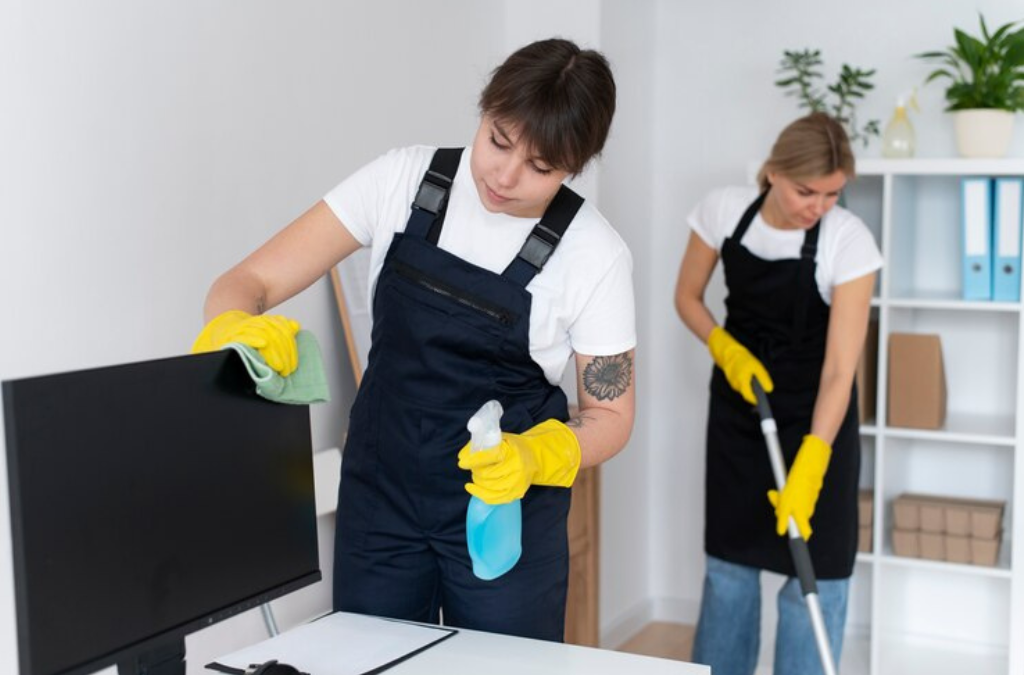
The completion of a renovation project marks not an ending but a transition, a liminal moment when the promise of transformation meets the stubborn reality of construction’s aftermath, and it is precisely at this juncture that Cleaning services after renovation Singapore become not merely convenient but medically and practically essential. Consider this: every surface in your newly renovated space harbours microscopic invaders, particulate matter that ranges from benign dust to potentially harmful silica crystals, each requiring systematic removal before the space can truly be called habitable. The human lung, that remarkable organ of gas exchange, was not designed to process construction debris, and therein lies the fundamental imperative for professional intervention.
The Pathology of Post-Renovation Contamination
To understand why Cleaning services after renovation Singapore have evolved into a specialised discipline, we must first examine the nature of the contaminant burden. Renovation generates what might be termed a toxic landscape, though “toxic” here encompasses both chemical and physical hazards. The Building and Construction Authority of Singapore identifies respirable crystalline silica as a primary concern in construction dust, particles measuring less than 10 micrometres that can penetrate deep into pulmonary tissue. At concentrations typical in post-renovation environments, these particles, whilst not immediately dangerous, represent a persistent irritant that compromises indoor air quality.
But the contamination extends beyond dust alone. Paint volatiles, adhesive residues containing organic solvents, and cement alkalinity create a complex chemical environment. Singapore’s National Environment Agency notes that indoor air quality following renovation can remain compromised for weeks without proper remediation, as these compounds continue off-gassing whilst particulate matter circulates through air conditioning systems, creating what epidemiologists might recognise as a chronic low-level exposure scenario.
The Anatomy of Professional Restoration
Professional cleaning services after renovation Singapore employ a systematic, almost surgical approach to contamination removal. The methodology follows a logical progression, each phase building upon the previous, much like the staged protocols in medical treatment.
Initial Assessment and Gross Decontamination
The first intervention addresses visible debris and construction waste. This phase, whilst appearing straightforward, requires compliance with Singapore’s waste disposal regulations. The National Environment Agency mandates proper segregation of renovation waste, distinguishing between general waste, recyclables, and hazardous materials. Professional services navigate these requirements routinely, ensuring legal compliance whilst clearing the space for detailed cleaning.
Particulate Remediation
This phase represents the core intervention. Industrial vacuum systems equipped with HEPA filtration capture particles down to 0.3 micrometres with 99.97 per cent efficiency. To appreciate this specification, consider that human hair measures approximately 70 micrometres in diameter, making the targeted particles more than 200 times smaller. The Housing and Development Board recommends this level of filtration specifically for post-renovation cleaning, recognising that standard household equipment merely redistributes fine particles rather than capturing them.
The tropical climate complicates this process. Singapore’s Meteorological Service records ambient humidity averaging 84 per cent, creating conditions where dry cement dust rapidly absorbs atmospheric moisture, transforming into adherent films that resist simple vacuuming. Professional Cleaning services after renovation Singapore understand this environmental interaction, timing their interventions and selecting cleaning agents accordingly.
Surface-Specific Treatment Protocols
Different materials demand different therapeutic approaches, if we may borrow medical terminology. The cleaning protocol must account for substrate vulnerability whilst maximising contaminant removal:
- Freshly painted walls require pH-neutral solutions that remove cement film without compromising paint adhesion or colour stability
- Glass surfaces need alcohol-based cleaners that dissolve adhesive residues whilst preventing streaking in Singapore’s humid conditions
- Timber flooring demands water-minimal approaches to prevent moisture absorption and subsequent warping
- Natural stone surfaces require acid-free formulations, as acidic cleaners etch calcium-based stones like marble
- Stainless steel fixtures benefit from directional cleaning that preserves the grain and protective oxide layer
- Air conditioning components need antimicrobial treatment to prevent mould colonisation in their inherently damp environments
The Temporal Dimension: Why Speed Matters
The title’s emphasis on speed reflects a genuine practical concern. Construction contaminants do not remain inert but interact dynamically with the environment. Cement dust, when combined with Singapore’s atmospheric moisture, undergoes partial hydration, creating increasingly stubborn residues as time passes. Paint residues oxidise and harden. Adhesive compounds cure fully, making removal progressively more difficult.
The Ministry of Health’s guidelines on indoor air quality implicitly recognise this temporal factor, recommending prompt post-renovation cleaning to minimise occupant exposure. Young children, who spend considerable time at floor level and exhibit higher respiratory rates relative to body mass, face particular vulnerability. Professional cleaning services after renovation Singapore compress the restoration timeline, reducing the window of exposure.
The Technology of Restoration
Modern professional cleaning represents the convergence of chemistry, physics, and empirical knowledge. Microfibre technology, for instance, exploits electrostatic attraction and physical structure to capture particles that conventional materials would miss. Industrial extraction equipment generates suction pressures impossible to achieve with domestic tools. Specialised cleaning formulations balance multiple requirements: effective contaminant removal, material compatibility, rapid action, and environmental acceptability under Singapore’s chemical regulations.
The Return to Habitability
The renovation journey achieves completion only when the space becomes genuinely liveable, when air quality returns to acceptable parameters and surfaces no longer harbour construction residues. This transformation, from contaminated to clean, from potential hazard to safe haven, represents the essential contribution of professional intervention. For Singaporean homeowners navigating the final phase of renovation, comprehensive Cleaning services after renovation Singapore provide the bridge between construction’s end and comfortable occupation’s beginning.

Comments