
 By
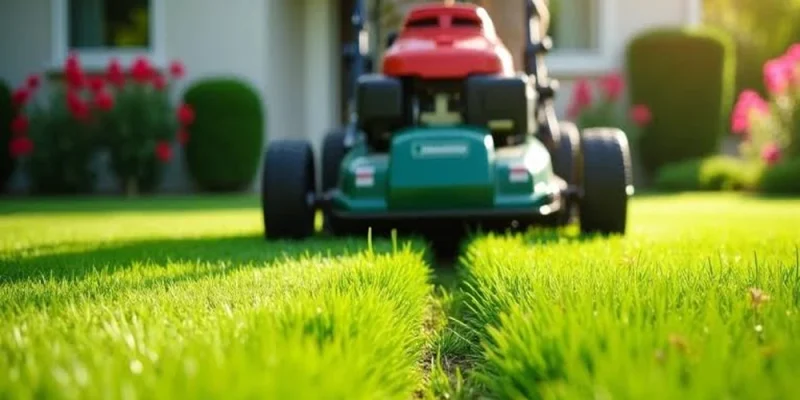
Grass cutting is commonly treated as a cosmetic expense, the first item to be stretched when budgets tighten. The reasoning is that grass left an extra few weeks can simply be cut shorter next time. In a climate with year-round growth, that assumption proves costly. A regular grass cutting service is a form of preventive maintenance, and the effects of skipping it show up in turf health, pest activity, safety and eventually in repair bills.
Growth Does Not Pause in the Tropics
Temperate lawns rest for part of the year. Lawns in Singapore do not. Warmth and rainfall keep grass and weeds growing every month, and growth accelerates during the wetter periods. A lawn that looks acceptable today can be ankle-deep within a few weeks. Maintenance planned around occasional visits is always behind, and each visit becomes a clearance operation. A fixed cycle keeps the workload small and predictable, which is easier on both the turf and the budget.
How Irregular Cutting Damages Turf
Grass stores its energy in the leaf blade. A widely used guideline is to remove no more than about a third of the blade height in a single cut. When a lawn is allowed to grow tall and is then cut hard, far more than that is taken off, exposing pale stems and bare soil. The turf weakens, thins and takes time to recover. Repeated over several cycles, this produces a patchy surface that no amount of mowing will correct without renovation.
Weeds Take Advantage of Gaps
Dense turf is its own best defence. Where the grass is thick and evenly cut, weed seeds struggle to reach soil and light. Thin or scalped areas give them an opening, and many tropical weeds set seed quickly if they are not cut before flowering. Regular mowing removes seed heads before they mature and favours the lawn grasses over taller, coarser invaders. Once weeds dominate, the remedy involves herbicide, returfing or both, at considerably greater expense.
Pests, Drainage and Site Hygiene
Long grass is shelter. Rodents and snakes move through it unseen, and mosquitoes rest in the cool, humid layer near the ground. Litter and fallen branches are hidden instead of collected, and drain inlets become clogged with vegetation. These issues affect existing lawns and are equally relevant after landscape construction, when newly laid turf and drainage need consistent early care to establish. Routine cutting keeps the surface open to inspection and lets small problems be found on each visit.
Safety and Visibility
Overgrown areas conceal hazards. Uneven ground, open drains, sprinkler heads and tree roots are easy to trip over when they cannot be seen. Along driveways and at junctions within an estate, tall verges block the view of approaching vehicles and pedestrians. For commercial and strata properties this is a liability issue as well as a practical one. A maintained height across the site keeps sightlines clear and makes it evident where it is safe to walk.
What Tenants, Buyers and Visitors Infer
People read the grounds as a signal of how the whole property is run. Neat lawns suggest that less visible systems are also looked after. Neglected grass prompts the opposite conclusion, fairly or not, and can influence a prospective tenant or buyer before they have stepped inside. For managing agents, complaints about landscaping are among the easiest to avoid, since the remedy is simply consistency. The cost of regular attention is modest set against the reputational effect.
The Economics of a Fixed Schedule
Irregular work is priced at a premium. Overgrown sites take longer to cut, require heavier equipment, generate more waste to cart away and wear out blades faster. Providers quote accordingly. A contract with fixed visits allows the provider to plan labour and the owner to budget accurately. It also creates accountability: missed visits are obvious, and the standard at each visit can be checked against an agreed scope instead of being argued about afterwards.
What a Regular Visit Should Include
Regularity is of little value if each visit is superficial. A proper routine covers mowing of all turfed areas to an agreed height, trimming along edges and around obstacles, clearing clippings from hard surfaces and checking drain inlets beside the lawn. The crew should also report bare patches, waterlogged spots, pest signs and broken sprinklers as they find them. Setting these tasks out in writing gives both parties a common standard and makes it simple to confirm that every visit has been completed in full.
Coordinating With Tree Maintenance
Lawns and trees share the same ground and affect one another. Low limbs prevent mowers from reaching the turf, dense crowns shade it out and exposed roots damage blades. Scheduling a tree cutting service alongside the mowing programme allows crowns to be lifted and dead wood cleared before it falls on the lawn. It also means one set of site rules, one point of contact and fewer separate disruptions for residents or tenants over the year.
Deciding on the Right Frequency
There is no single correct interval. Consider how fast the grass on the site grows, how visible each area is and what the space is used for. Front lawns and common areas of occupied buildings usually justify more frequent visits than back boundaries or vacant land. Begin with a schedule the provider recommends after seeing the site, review it after two or three months, and adjust it by area. The right frequency is the one at which no visit has to be a rescue.









Comments