
 By
By 
Controlled implosion brings to mind magic—one moment a massive building is standing, a few seconds later it seems to fold in on itself and comes to rest within a tidy footprint. Behind the scenes, the magic is mathematics, material science, and detailed planning. This article explains how the choreography and determination of a demolition and the follow-up of the demolition, including construction debris removal and recycling, are all planned out.
What Is an Implosion?
An implosion is a method of demolition that allows a building to collapse inward as opposed to tipping limp like a tree. Engineers tend important columns to weaken them, and use small but carefully sized explosive charges, placed in calculated and strategic locations. When the charges detonated in a precise sequence across milliseconds, gravity does the rest and pulls the building vertically down.
Read more on this link https://en.wikipedia.org/wiki/Implosion_(mechanical_process).
Columns failed in a “pre-weakened” manner, stairwells and elevator shafts act like smokestacks for dust, and lower floors soak up the energy of the collapsing upper floors. Therefore, the debris will be both quicker to sort, recycle, and haul away by using property clean-out services and/or junk hauling teams.
Engineering Precision Required
Implosions require high understanding of engineering applied to how loads move throughout a building. Structural drawings are examined, site surveys record each column and connection, and materials are sampled to understand as much as they can about the strength, behavior and brittleness. Redundancy is built into every step to simply that if one cut performs poorly, the sequence can still drive the targeted collapse path.
Before any detonator is wired, the demolition contractor practices the “collapse mechanism”—which columns fail first, which walls are contributing bracings and where debris will locate. Even adjacent utilities and pavement are assessed to mitigate damage and stage the debris removal expeditiously once a controlled demolition is complete. After the pre-demolition planning is complete, the following technical controls come together:
- Modeling and surveying: Laser scanning is utilized to inspect actual dimensions; engineers then model a progressive failure collapsing inward into its footprint.
- Charge selection and placement: Linear shaped charges or small diameter borehole charges are sized for each column material and thickness to provide a cleaved steel or fractured concrete cut.
- Delay timing network: Detonators fire in a wave, usually between 25-75 milliseconds apart, to initiate collapse from the core out, allowing the structure to fold into itself.
- Pre-weakening and isolation: Saw cuts, torch cuts or jackhammering is used to pre-weaken the capacity of selected columns with utilities disconnected and dust-control systems staged, as appropriate.
- Perimeter and catch systems: Earth berms, geotextile curtains and boarded windows protect surrounding structures, while directing debris onto a tight footprint allowing loaders access.
Case Studies of Notable Implosions
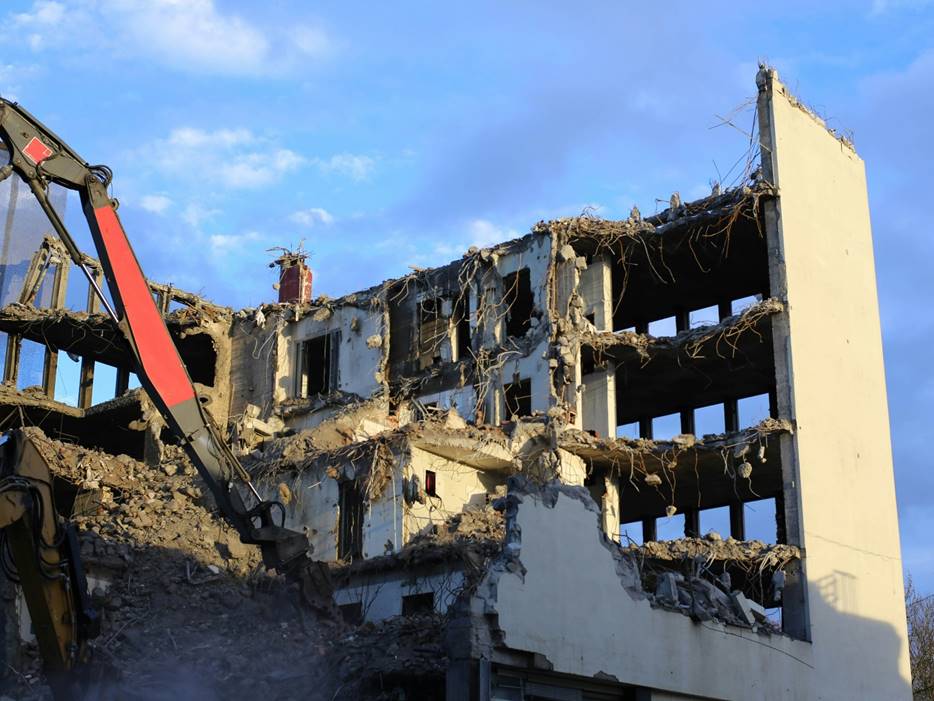
A few projects demonstrate just how differently different buildings require their own choreography. An example of the Seattle Kingdome implosion in 2000 which lowered this massive reinforced-concrete stadium by super-timing several thousand charges to drop the roof ring first, and supporting ribs next, or the Sands Hotel in Las Vegas in 1996, showcased the interrelationship of pre-weakening and symmetrical timing to keep a tall hotel from twisting as it fell. The Georgia Dome implosion (2017) demonstrated urban precision: a large building precisely dropped into a pair of city blocks without damaging transit lines.
These events also have the post events of debris handling while it cools, mists, to be refined for separable metal that will be recycled, and concrete to be crushed. For residents wanting action after smaller projects, sheds, garages, or demolition gut jobs, it is sensible to contact All Around Removal King of Prussia, for speedy schedules and responsible disposal of materials close to home.
Safety Precautions for Spectators
Implosion events are public events, and they are also industrial events done with surgical precision. Demolition crews will establish exclusion zones, use sirens for heads up and countdown, and work with police and fire and transport entities. The spectators all share an obligation to respect sight lines, and obey barriers which are put in place specifically to protect them from dust, vibration and projectiles from any nearby building debris.
Before, during, and after the countdown, line of sight is taken into consideration. Here are some points for the spectator to follow:
- Follow all known barriers and standoff distances. The barriers are built on worst-case scenarios of possible fragment paths, overpressure and unforeseen wind.
- Protect your eyesight, ears and lungs. Ear plugs are temporary, dust-mask has limited value. When you think there is a chance for a brief excessive noise exposure, e.g., if you have a plume of dust travelling your way.
- Be mindful of down-wind implications. Position should be on the upwind side when possible. Avoid low-lying areas where dust can travel for a long distance.
- Watch footing and traffic. Crowds congregate at corners and parking lots; trip hazards and distracted drivers are suitable things to watch for unsuspecting victims.
- Wait for your all clear. After the demolition charge is fired, an area must be verified safe before anyone is permitted to a designated clean-up path.
Environmental Concerns with Implosions
Responsible implosion explosions mitigate any possible environmental effects long before the first charge is loaded. Hazardous materials—such as asbestos, lead paint, or equipment that once had PCBs—are made safe before demolition, so that they do not become aerosolized. Vibration amps guarantee that the relevant precautionary measures are employed for historical buildings, and where you could have infrastructure underground. Street cleaning, after the event, will clean residual fines that can spread in your neighborhood.
Once the debris pile is deemed safe, contractors will sort rebar and structural steel for recycling and crush clean concrete for re-use aggregate. Efficient sorting at the same time decreases tonnage and tipping fees, which is also true for property cleanout services, which assist during estate cleanout and appliance disposal events on a much smaller scale. Collaboration and haul schedules will limit truck idling in neighborhoods while creating traffic issues, contribute to cleaner streets, and restore pedestrian sidewalk designated uses—the same reason that careful local junk removal logistics are equally as important as the collapse explosion itself.









Comments